

Pioneer Insights

Credit Markets Show Resilience and Challenges in 2026
Bonds and Credit investments have had a rocky few years. As interest rates rose in 2022 bonds lost value but also become more attractive as yields rose to levels not seen in many years. 2026 has been more stable but inflation worries with conflicts in the middle east are making yields a bit more sticky than some expected.

The Biggest Risk to Long-Term Wealth Isn't the Market, It's Investor Behavior
Learn how behavioral finance influences investment decisions and discover strategies high-net-worth families in Austin, Albuquerque, and Santa Fe can use to avoid costly mistakes and build long-term wealth.

Why Today's Best Companies Stay Private Longer: What It Means for Investors
Since 2000, many of the world's fastest-growing companies have delayed going public, allowing private investors to capture more of their early growth. This shift is changing small-cap investing, market concentration, and how high-net-worth investors think about portfolio diversification. Understanding the evolution of public and private markets is increasingly important for long-term investment success.
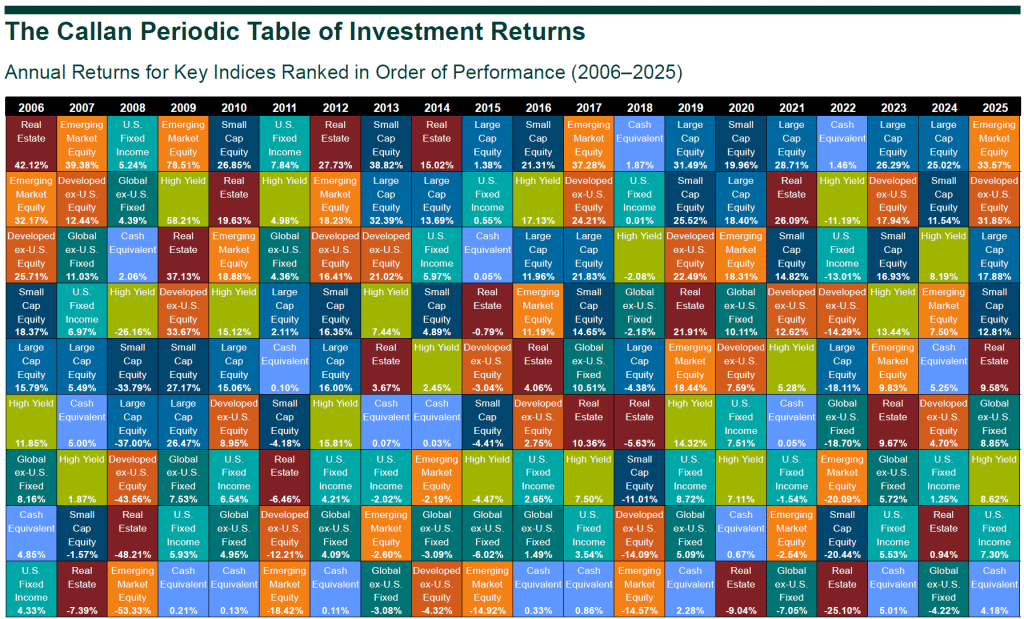
Building a Portfolio vs. Chasing Performance - Learning from Recent Market Performance
For roughly five out of the past seven years, U.S. large-cap companies were on fire. The biggest and most popular of these companies dubbed the Magnificent 7 – Apple, Nvidia, Microsoft, Tesla, Meta, and Alphabet - dominated news headlines and water cooler conversations across the country.


Why “Good Investment Performance” Is Only One Piece of a Strong Financial Plan
Investment performance is easy to measure. Peace of mind is not.
While returns matter, they are only one input into a much larger financial picture—one that determines whether wealth actually supports the life you want to live.

Lessons from the Trail: The Glittery Burden
While thru-hiking on the Appalachian Trail in Georgia I noticed shimmery gold rocks the second day of my hike. These particular rocks were gorgeous…more sparkly and glittery than any other I have seen in nature. These rocks would be a beautiful addition to the prominently displayed rock collection in my living room. Throughout the next few days, I saw even more outstanding rocks…rocks outlined in gold & copper, rocks that couldn’t be any purer white, and a single rock that was colorless and absolutely flawless. I pondered the possibility of adding these rocks to my collection and what it would mean to carry them the next 178 days. Let’s explore this idea.

Cash Isn’t King Forever: What Falling Interest Rates Mean for Your Cash
Over the last two years, cash has made a comeback. Yields on high-yield savings accounts, CDs, and money market funds approached 5%. Many investors found these accounts as an appealing, low-risk option for earning returns. However, as short-term interest rates start to decline, cash may lose its shine. Let’s explore why the landscape is changing and how to protect your wealth as the era of high cash returns begins to fade.

Back to School Commute: EV Market Updates
As your commute time increases or you find yourself returning to the gas pump again this week, you might be curious about a more energy-efficient ride.